Construction & Facilities
"A design team which produces a total, balanced, efficient design can help to produce a better environment."
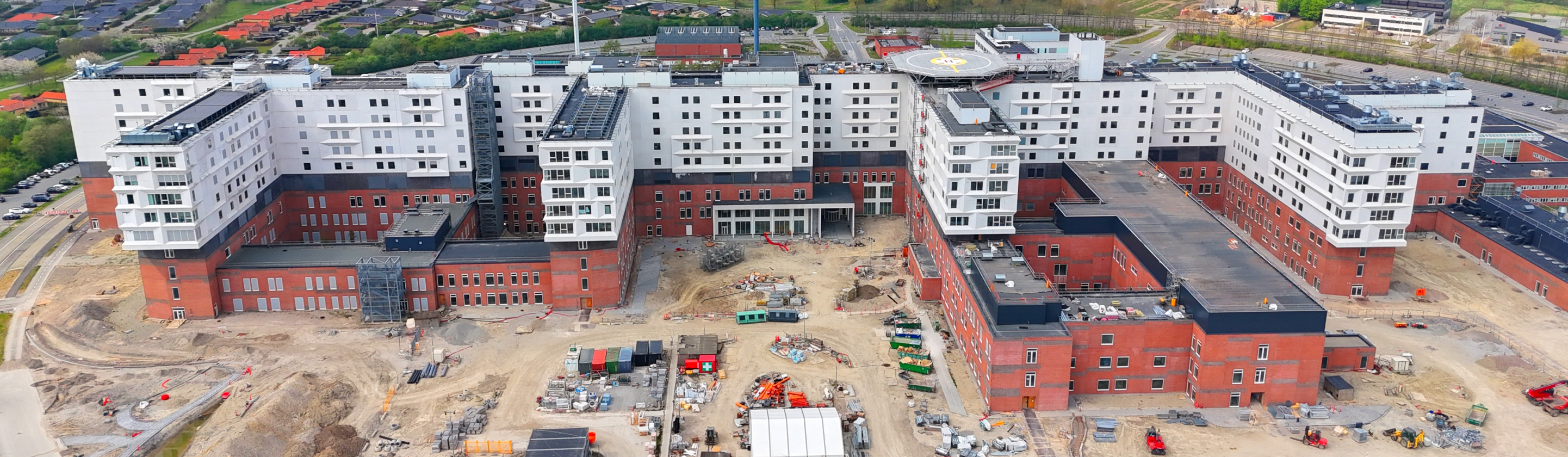
This category monitors the role of the built environment, including facility design and construction materials, in preventing the spread of microbes and combating AMR. It explores how architectural design, engineering controls, and material science can be leveraged to create healthier spaces that are less conducive to pathogen transmission.
Physical structures such as hospitals, clinics and nursing homes can be designed and constructed with infection control in mind and thereby contribute to reducing risks and untoward effects of AMR. The category is devoted to news, insights and solutions regarding clinical construction news and learnings therefrom, including inventions, installations and architectural modalities intended for and developed to counter AMR.
Since AMR and the societal handling of the challenge is a public health matter and therefore governed, if addressed, by the political level you will find news and information related also to healthcare systems in this category, including as, if and when renovation, extension or greenfield construction of entire new hospitals surface which will allow you to chip in from a professional viewpoint once the opportunity emerges. If you have a particular interest in business opportunities and wish to monitor and subscribe to tenders and RfPs in the field we recommend you take a peek at our Section Matchmaking & Partnering.
As hospitals are part of as well as have an impact on their environment by their treatments this topic is covered in this section, too. It has been estimated that healthcare may account for up to 6% of the global greenhouse gas (GHG) emissions and since pharmaceutical residues in wastewater, not least when it comes to antibiotics, you will find information about these matters in this category also.
Topics include the design of modern healthcare facilities, the integration of advanced HVAC and air filtration systems, and the development and application of antimicrobial materials and surfaces for high-touch areas. The focus is on proactive, engineered solutions that build infection control directly into the infrastructure of our buildings, thereby reducing the overall risk of infection.
News
View allFædrene til kunstig intelligens advarer mod dommedag - hvem tror Trump vil lytte?
Abstract
Problemet: Trump lytter ikke. Alle bør i grunden sætte sig ned og læse det åbne brev, som stifteren af Anthropic, Dario Amodei, udsendte fredag, hvor han tager et opgør med sin teknologi. Lige så opsigtsvækkende, som det åbne brev er, lige så opsigtsvækkende er det, at rivalerne og nogle af de markante teknologibosser i USA slutter massivt op. Andre læser ogsåPharma wins a battle over the cost of wastewater treatment in Europe
Abstract
In a boost for the pharmaceutical industry, a European Union Advocate General recommended annulling part of a directive that requires drug and cosmetics manufacturers to finance at least 80% of the costs of wastewater treatment. The directive, which revised an earlier version and went into effect early last year, was designed to protect human health and the environment from harmful discharges of urban wastewater and ensure cleaner rivers, lakes, groundwater, and coasts across Europe. A key portion of the initiative is a quaternary treatment stage" that involves removing micropollutants — which are mostly created by pharmaceuticals and cosmetics — from wastewater. Member states must ensure that companies contribute to programs to deal with the waste they generate by December 2028."Study highlights role of climate in rising US incidence of legionellosis
Abstract
Increased temps, precipitation linked to rising incidence The study, by Xiang-Yang Han, MD, PhD, a clinical microbiologist, pathologist, and medical director of laboratory medicine at The University of Texas MD Anderson Cancer Center, examined the ecological evolution and main causes of the rising incidence of legionellosis (infection with Legionella) in the United States from 1999 to 2021. Using publicly available data on annual and monthly infection rates, temperature, and precipitation, Han found that, compared with the first 100 years of annual temperature and precipitation data (1895-1994), temperature and precipitation levels rose by an average of 7.6% and 4.7%, respectively, from 1995 to 2021. Regression analysis indicated strong correlations between annual legionellosis incidence rates and cumulative temperature anomalies (ie, the change in temperature compared with the historical baselines) and rising annual precipitation amounts, which combine to promote the growth of Legionella bacteria in the soil. After 40 years of warming temperatures, the load of the organism in natural water and soil has increased." The data also indicated the emergence in 2018 and 2019 of a seasonal peak in legionellosis incidence lasting from early June through October."